Welcome/Willkommen!

Hello and welcome. Hope you enjoy the images I have posted. Please do not reproduce them without my permission. Most are available as note/greeting cards or as prints/enlargements. Thank you for visiting my site and your comments.
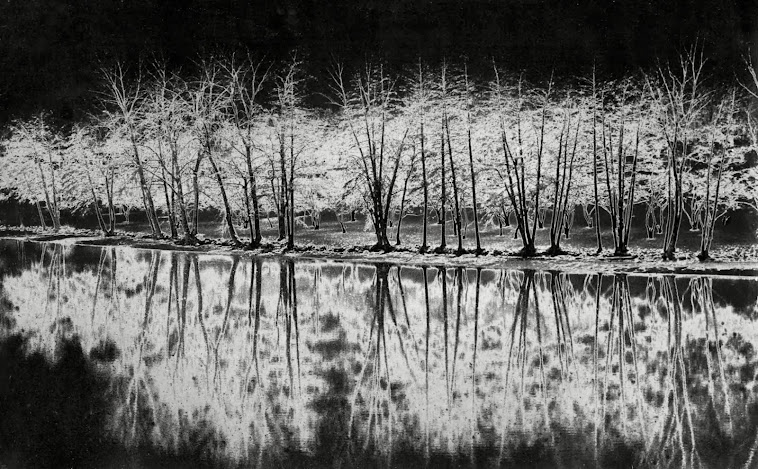
Many have asked about the Header image above, which I named 'Eerie Genny'. It was originally shot with film [taken on the shore of the Genesee River near the Univ. of Rochester]. During the darkroom development, I flashed a light above the tray. The process, known as 'solarization', produces eerie, ghostlike effects; some have mistaken this image as an infra-red photo. Some 35+ years later, I scanned and digitized the print, and did a little modern day editing, and, voila.
« I confirm the subscription of this blog to the Paperblog service under the username shattman ».

Tuesday, January 30, 2018

Greece Skies 2005: Naxos [Sky Watch Friday]

I finally get to actually begin posting photos from our trip to Greece in 2005. Two firsts here: these images were shot with my first digital camera, a relatively simple KODAK model Z1015. And, this trip was our first with an organized tour group, as we had always preferred to be on our own. However, sometimes it makes sense to join a tour and do things that might otherwise been inconvenient. So, we signed up to travel with a German group, Studiosis, which was restricted to a small number of islands. My wife speaks fluent German [she grew up in Braunschweig], and I could understand /speak the language enough to get by. After assembling in Athens, we all took a ferry to Naxos. Our first glimpse of the port of Matthiassos Village is below.


Through some snafu, there were no porters to help transfer our luggage from the ship to the hotel. I remember a long, hot and sweaty trek through the streets. But, once situated, we were ready to head out to see the iconic gate of the Apollo Temple, which we could see from our hotel [below].


This walk was decidedly easier than the earlier one with our luggage. The marble gate [dating back to ca. 600 BC] is all that remains of the temple [Top].  The middle image shows the route we took to reach the gate. The bottom image was taken as sunset approached.


We remained on Naxos for four nights, using it as our base pf operations to explore Naxos itself, as well as several other islands. The last two images were shot on Naxos. I don’t remember anything about the towers below [except that the one on the left is solid marble], nor where we were in this rugged landscape.


One of the islands that we did on a day trip was Delos. It is renowned for its history/ruins. The row of iconic lions is grand, but, theyare not the originals. Those are safely housed in a museum, which I did not know that until much later.

Thursday, January 25, 2018

Greece Skies: 1966 [Sky Watch Friday]

In my last posting three weeks ago, I indicated that I would resume with shots from a tour we took to Greece in 2005.  Actually, our first trip there dates back to 1966, when we drove in a VW Beetle  from Munich, Germany through Italy and Yugoslavia all over Greece. Back then, I was shooting Kodachrome 2x2 slides, and storing them in plastic Vis File pages. This proved to be a bad idea, since after several decades in loose leaf binders, they managed to accumulate specks of dust and dirt [which are obvious in the top two images]. I discovered that when I decided to put them through a digital scanner. It was quite a chore trying to remove the spots pre-scanning and post editing.  Having said that, I will delay again posting the 2005 shots and show you some 'ancient' images from this earlier trip.
Our first stop was in northern Greece in Meteora where monasteries were built atop giant sandstone pillars, starting in the 9th century A.D. To quote Wikipedia: “Access to the monasteries was originally (and deliberately) difficult, requiring either long ladders lashed together or large nets used to haul up both goods and people. This required quite a leap of faith – the ropes were replaced, so the story goes, only "when the Lord let them break". Until the 17th century, the primary means of conveying goods and people up and down was by means of baskets and ropes. Below are two shots that give some sense of the scale of these constructs.


Leaving Meteora, we headed south to Delphi, home of the Oracle of Apollo. The remains of a temple, an amphitheater, and several other structures are built into the mountainside. We happened to arrive during the filming of what appeared to be some religious rite in the temple [below].


 As the sun was going down, the light was magical. The shots below were taken higher up from the theater.


The last shot was taken in the harbor area of a place I do not recall. I found it fascinating how the fishermen worked together as a team mending their nets.


Thursday, January 18, 2018

Sky Watch Friday: Aruba Skies

In my last posting three weeks ago, I indicated that I would resume with shots from a trip we took to Greece in 2005. After returning from vacationing in Aruba, to the bitter cold of Rochester, NY, I have reconsidered. I think that looking at images of sun, sand and sea is what I need to do at this time; so, Greece can wait another week. [NOTE: Somewhere buried in my blog archives are other shots from Aruba, an island we have been visiting for more than 20 years. I apologize if any of the images below bear any similarity to earlier images. Having said that, here are my newest (cell phone) shots.] Immediately below is a pair of the famous Divi trees; they have been bent in the direction that the trade wind blows.


Here is a portion portion of Eagle Beach, Judged by Trip Advisor to be #3 among the top beaches world-wide.


Thursday, December 28, 2017

Prague 6: Some Culture [Sky Watch Friday]

This posting will complete our tour of wonderful Prague. I must apologize to SWF for not showing any sky today; but, since it is #6 in the series, I am taking the liberty of showing them.
The morning of our last day began with an exploration of the Museum of Modern Art. This mirror-like wall near the entrance is difficult to describe. At first glance, I thought that the shimmering reflections was due to water running down the wall surface. But, actually, if I heard it correctly, huge fans were blowing air behind and against it. Evidently, the wall surface was flexible and fluttered under the powerful air stream. [If you look carefully, you can see me in the upper left quadrant wearing a beret and taking the shot.]


One of the featured exhibits was that of Ai Weiwei, the Chinese dissident artist. It was an homage to refugees. The structure below seems to depict the plight of faceless ‘boat people’ in flight. The scale of the raft is enormous, easily 100 meters long [look at the individual standing below it in the right hand corner].


On our own for the afternoon, we walked to the Mucha Museum. Alfons Mucha was a prominent Art Nouveau artist in the early 20th century. In my post of St. Vitus’s Cathedral [see Prague 2], I showed his  stained glass window. The exhibition contains an overview of the work of Mucha featuring a set of posters made during his ‘Parisian Period’ [188701904],  including those made for the actress, Sarah Bernhardt. They are all in soft pastel colors, as seen in the samples below.


We rode back to the hotel by tram [seniors 70 and over can ride the bus, tram, or metro free of change]. After dinner, we were transported to the National Theater where we were treated to a performance of Antonin Dvorak’s opera, Rusalka. The interior of the theater was beautiful and ornate. My cell phone shots do not do justice to its grandeur.


This concludes our Vienna-Budapest-Prague trip postings. I hope you enjoyed them; I will return in mid-January with images from our Greece trip in 2005.

Thursday, December 21, 2017

Prague 5: Along the Vltava [Sky Watch Friday]

We continued on our free time by strolling along the Vltava. This gave us an opportunity to see Prague from a different perspective. For example, we had been up to the Hradcany Prague Castle several days earlier. Now we could see it from across the river. Note the towers of St. Vitus’s cathedral towering above.


Heading in the opposite direction, we saw a line of houses with wonderful Baroque facades. Remember that Prague was spared the WWII bombardment that had, for example, devastated Budapest. So, virtually everything of beauty has remained intact. The lower image shows how close to river these houses are situated.


From the vantage point of a nearby bridge, I shot this image. Note that the bottom one has been edited to remove a number of objects.


The bridge we were on was quite busy with pedestrian and vehicular traffic. In the two images below, I made a color to B&W conversion, as well as edit out a number of distracting details. Which version do you prefer?


Not only the bridge, but also the Vltava was bustling (with small boat traffic). The Charles Bridge is in the background.

That same evening, our group bused to the Charles Bridge for a walk across it [to our restaurant for dinner]. The shots below were with my cell phone.You can see a slight reddening of the sky as the sun is setting.


Thursday, December 14, 2017

Prague 4: Old Jewish Quarter [Sky Watch Friday]

Following a lively morning presentation on Czech music, we proceeded to the old Jewish quarter. The history of the Jews in Prague is too complex to describe. Needless to say, they suffered through the centuries as two distinct communities were merged into one ghetto. In 1890 it was razed for supposed health reasons, but the Town Hall, several synagogues and the Old Jewish Cemetery were spared. The tower of the Jewish Town Hall is below.The right to build the tower was granted to the community after they helped defend the Charles bridge against invading Swedes in 1648. Note the presence of a second clock with Hebrew figures. Because Hebrew is read from right to left, this clock turns in the anti-clockwise direction.

 
Close to the town hall is the Pinkas Synagogue. Founded in 1479, it has been rebuilt many times. The core of the present building is a hall with Gothic vaulting.


The Synagogue now serves as a memorial to all the Czech Jews who were imprisoned in Terezin (Theresienstadt) and died there or in one of the concentration camps to which they were subsequently deported. The names of the 77,297 who did not return are inscribed on the Synagogue walls. If you look through the grill work, you will see a small sample of the inscriptions. The panels of names are arranged according to geographical regions from which the victims were taken, and they include their dates of birth and deportation/presumed death. The building also houses an exhibition of drawings made by children in Terezin these are too depressing to show here.


Adjacent to the Synagogue is the Old Jewish Cemetery, which for over 300 years was the only permitted burial ground. Founded in 1478, it was slightly enlarged over the years, but remains essentially unchanged.Because of its small size, people had to be buried on top of one another, up to 12 layers deep. Some 12,000 gravestones are crammed into this space; but the actual number of those buried here must exceed that number. Below is a sampling of headstones. The last image is the stone of the most famous personage in the cemetery, Rabbi Löw, buried in 1609. The reddish color is characteristic of sandstone weathering over time. 


There are actually several additional synagogues in Prague, but I will discus just one more, the Spanish Synagogue. The current building, which dates from the second half of the 19th century, was built on the spot of an 11th century synagogue (the first in Prague). What makes the Spanish Synagogue of architectural interest is its Moorish appearance. The walls and vaults are richly decorated, reminiscent of the Alhambra in Spain, hence its name.